

Key Highlights
- Equestrian disciplines showcase various riding styles, highlighting the bond between horse and rider.
- Popular examples include dressage, an Olympic equestrian sport often referred to as “horse ballet,” and show jumping, known for precision and agility over fences.
- Western riding disciplines like reining and western pleasure emphasise smooth movements and style.
- Long-distance endurance riding challenges horses and riders on their stamina and skill over extended terrain.
- Vaulting combines gymnastics with horse riding, offering a unique artistic aspect in equestrian sports.
Introduction
Equestrian sports show the strong link that people have with horses. These sports mix skill, hard work, and old customs in many riding styles. You can see people on horses in arenas or riding on natural paths. Equestrian disciplines are a great way to see the many ways you can ride, try, and be creative with horses. It does not matter if you love the class of dressage or get excited watching show jumping. In this wide world of horseback riding, there is something that each person can like.
This guide looks at different equestrian disciplines. It will help you find out about the art, drive to win, and love that these sports bring to your own time with equestrian sports.
8 Remarkable Examples of Equestrian Disciplines Explained
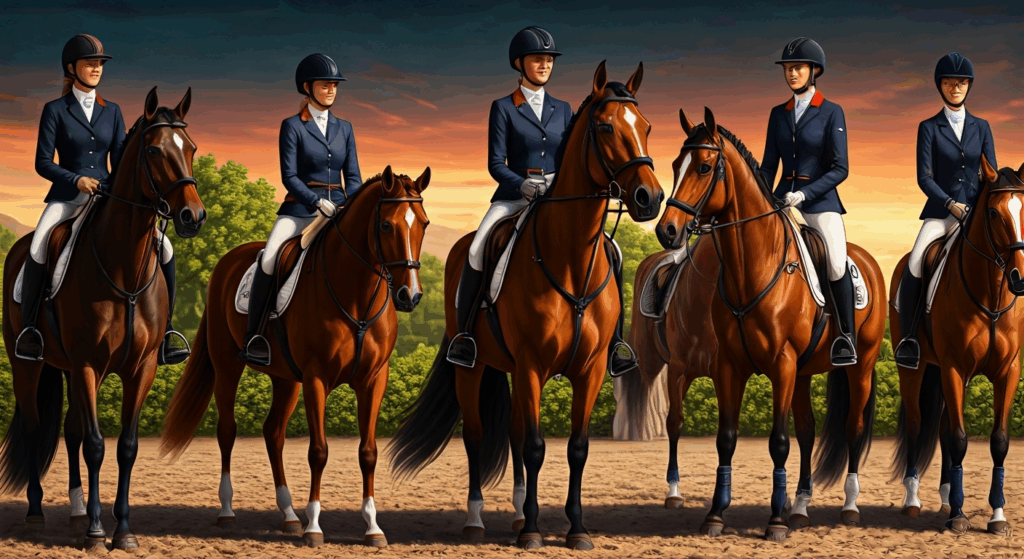
In show jumping, horse and rider must work together to be accurate. Western riding focuses on calm and steady moves. Then, there is vaulting. This shows off how flexible riders can be, almost like an art. In eventing, horses and riders need to be good at more than one thing.
Look at the eight main equestrian disciplines shared here. You will see how they change horse shows, competitions, and fun times with horses for people all over the world.
1. Dressage: The Art of Horse and Rider Harmony
Dressage comes from the French word for “training.” People often call it “horse ballet” because it is very beautiful and needs a lot of skill. In dressage events, horses and riders move as one. The pair must both be calm and show perfect steps. They need to be elegant and smooth, doing things like pirouettes, half-passes, and cantering between gaits. This shows the horse is fit and the rider can control even the smallest change. The horse does these moves easily when the rider gives soft signals. The horse and rider both need to understand each other for things to look this good.
Most dressage events have a strict dress code. People taking part wear proper outfits to keep tradition and look professional. Trainers help horses by working on balance, flexibility, and strength. They also want to build a bond between human and horse. Dressage has roots in English military history. It started as a way to get cavalry horses ready for tough times in battle. Even now, this “horse ballet” is an art admired all over the world.
If you want something that is beautiful and also a tough challenge, you may like dressage. It gives people chances to feel a special link with their horse that is hard to find in other sports.
2. Show Jumping: Precision Over Fences
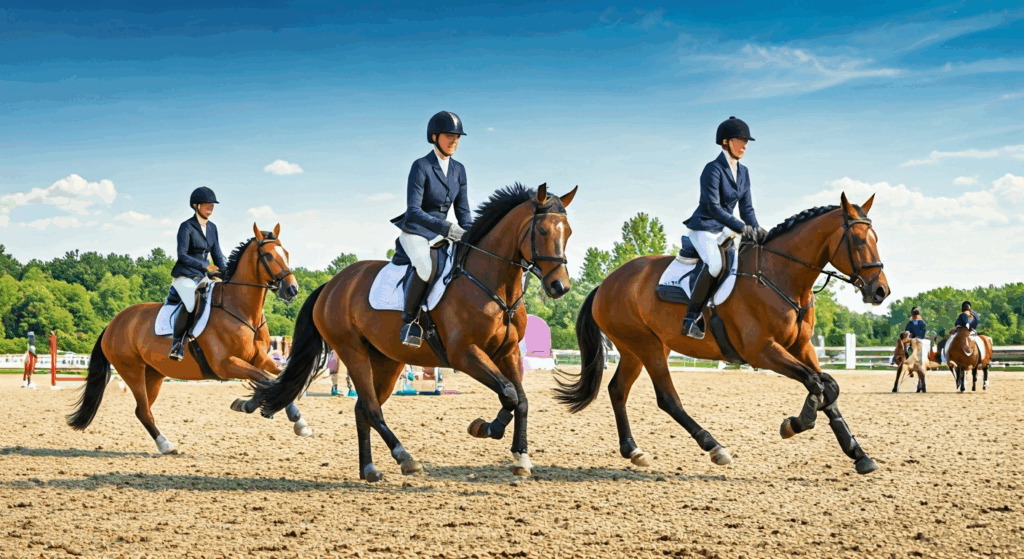
Show jumping is an exciting sport. It brings action and challenge as riders and horses go over a set of jumps. These jumps are made to test how quick and sharp the horse and rider can be. The sport is a top choice in equestrian disciplines because it asks for both control and good speed. On each course, there are different fences. Some are tall, some are wide, and some come in special groups or shapes like verticals, combinations, and oxers. All of them ask for a lot of focus and for the pair to work well together. The main goal is simple: get through all the jumps without mistakes in the set time. If you do not, you get penalty points.
There are world-famous horse shows that always include show jumping. Big events like the World Equestrian Games use this sport for its mix of skill and make-or-break pressure. To do well, riders and their horses need to work as one. Riders help their horses guess the right spot to jump and help them leap cleanly. If a horse stops or knocks a rail, there are penalties. There is no time to waste. Every second matters because even one slip can mean more penalty points.
Show jumping is not just one of the most popular equestrian disciplines. It is loved because it brings joy, sharp skill, and hard competition to people all over the world.
3. Eventing: The Ultimate Test of Versatility
Eventing brings together three equestrian disciplines: dressage, cross-country, and show jumping. This all-in-one competition is a big test of skill, strength, and willpower. In eventing, the horse and rider must handle many types of ground, a lot of obstacles, and tests that get harder as they go. It started out as a training test for cavalry horses. Today, eventing is a key part of the Summer Olympics and many other big equestrian events.
People can take part as a team or compete in individual events. The courses have both natural and man-made things to jump over or go around. During each test, judges look closely at things like accuracy, speed, and confidence. Eventing also has strict rules. Horses and riders get penalty points for stop-and-start moves, slowing down too much, or messed-up jumps. If there is a fall, that leads to automatic disqualification.
Eventing is a demanding sport. It asks both the rider and horse to be good at many things. That is why so many people who love horses and awesome challenges want to give it a try. This discipline gives you a new way to see skill, heart, and mind working together. Eventing is well-known for showing the best in endurance and the ability to adjust and handle all sorts of situations.
4. Western Pleasure: Smoothness and Style in the Arena
Western pleasure is all about smooth moves, style, and being exact. In western riding, this equestrian sport is known for showing off the horse’s calm mood and how easy it is for the horse to move. Judges watch to see if the horse’s movements look relaxed while it walks, trots, or lopes in the arena. They also look at how well the horse listens to the rider and reacts to gentle signals.
Western riders, in this riding discipline, care more about riding with skill than going fast or jumping. They often use tack that fits the challenge, such as the western saddle. This adds to the practical and nice look western sports want in a riding style. In the arena, it is all about riding in a way that looks so easy and shows real trust between a horse and the person riding it.
No matter if you are new or already know a lot, western pleasure gives you the chance to feel the skill and look of western riding. That is a big part of why it stands out in today’s equestrian sports.
5. Endurance Riding: Long-Distance Challenges
Endurance riding takes both people and horses on a long journey. It is all about facing big challenges over different types of ground. This riding style started with army horse tests, so it needs a lot of stamina from the horse and rider. In competitive trail riding events, you may see races that go from 50 to even 100 miles or more. Riders and horses have to go over rough and changing landscapes.
In endurance competitions, you need to watch the pace, not just the distance. Riders have to check on their horses, making sure they stay fit and healthy during the race. There are stops for veterinary checks to see if the horse is okay to keep going. If a rider wants to do well, they must have a good mix of skill, a plan, and solid horsemanship.
If you want a riding style that is both a competition and an adventure, endurance riding is a great choice. It gives you a fun and fast journey, testing your strength and love for the outdoors. Trail riding during these events really lets you be a part of nature and show your endurance.
6. Reining: Western Riding’s Showpiece
Reining is a popular part of western riding. In this riding discipline, horses and riders need to show skill, sharpness, and smooth control. The sport is a bit like dressage. Horses follow set patterns with moves like smooth circles, fast spins, and the famous sliding stops. All these are done with both energy and grace.
Western riders must be good at showing their horses what to do. They use simple and light signals to guide their horses. This is important to make sure each move is done just right. Judges give higher scores to horses that seem very willing, move easily with their riders, and show quick, accurate steps.
The sport of reining honors older American West ways of riding. It shows off how much skill and trust there can be between horse and rider. If you want to see controlled movements and style in western riding, reining is a great sport that gives the old traditions new life.
7. Vaulting: Gymnastics on Horseback
Vaulting mixes gymnastics with horseback riding. It is one of the oldest types of equestrian sports. This started in Rome. Today, people do modern vaulting by showing skills while moving on a horse’s back. Vaulting is both about art and being active. It helps people show their balance, strength, and the way they move together.
Trained horses move in calm ways. While the horses move, the riders do handstands, flips, and dance-like moves on the horse’s back. These shows can amaze crowds at equestrian sports events. Beginners often practice simple moves to start. They work their way up to harder tricks as they go on.
Anyone can try vaulting, no matter their age. You do not have to know horseback riding to begin. It helps people learn how to move better and work as a team with horses and other people. It is a way to build new athletic skills while having fun on a horse’s back.
8. Saddle Seat: High-Stepping Elegance
Saddle seat is well-known in equestrian sports for showing a high-stepping and elegant riding style. In this style, you see horses with lively gaits and straight, upright stances. It works best with some types of horses, like the American Saddlebred.
This way of riding started in American competitions. The saddle used in saddle seat lets the rider sit farther back, which helps bring out the horse’s movement. In equitation classes, judges focus on how well the rider handles the horse and how smoothly they work together. What sets this riding style apart is its link to American culture and traditions.
Saddle seat is about showing the rider’s skill and the horse’s great energy. If you want to try something different, this riding style gives you a way to show your talent and be part of the equestrian sports community.
Comparing English vs. Western Equestrian Disciplines
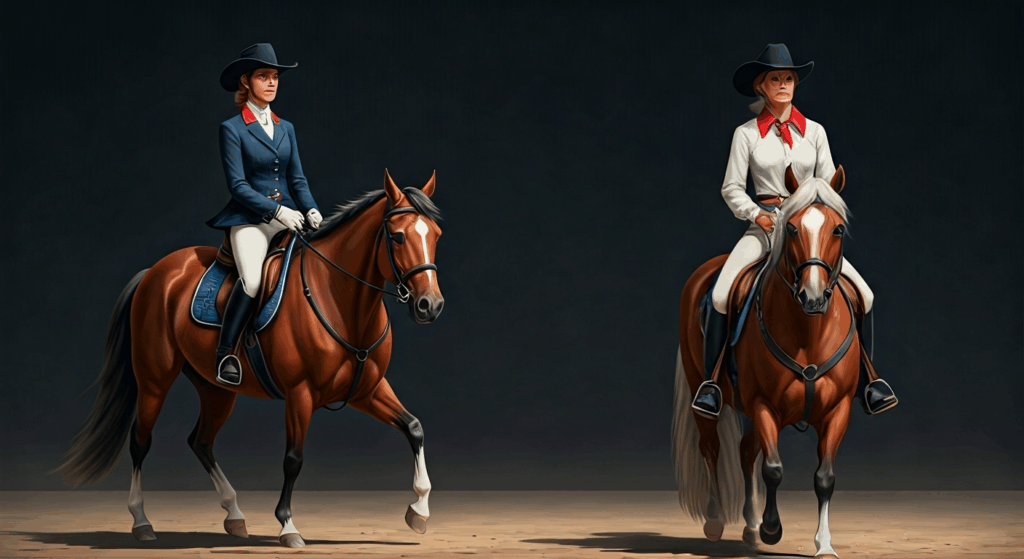
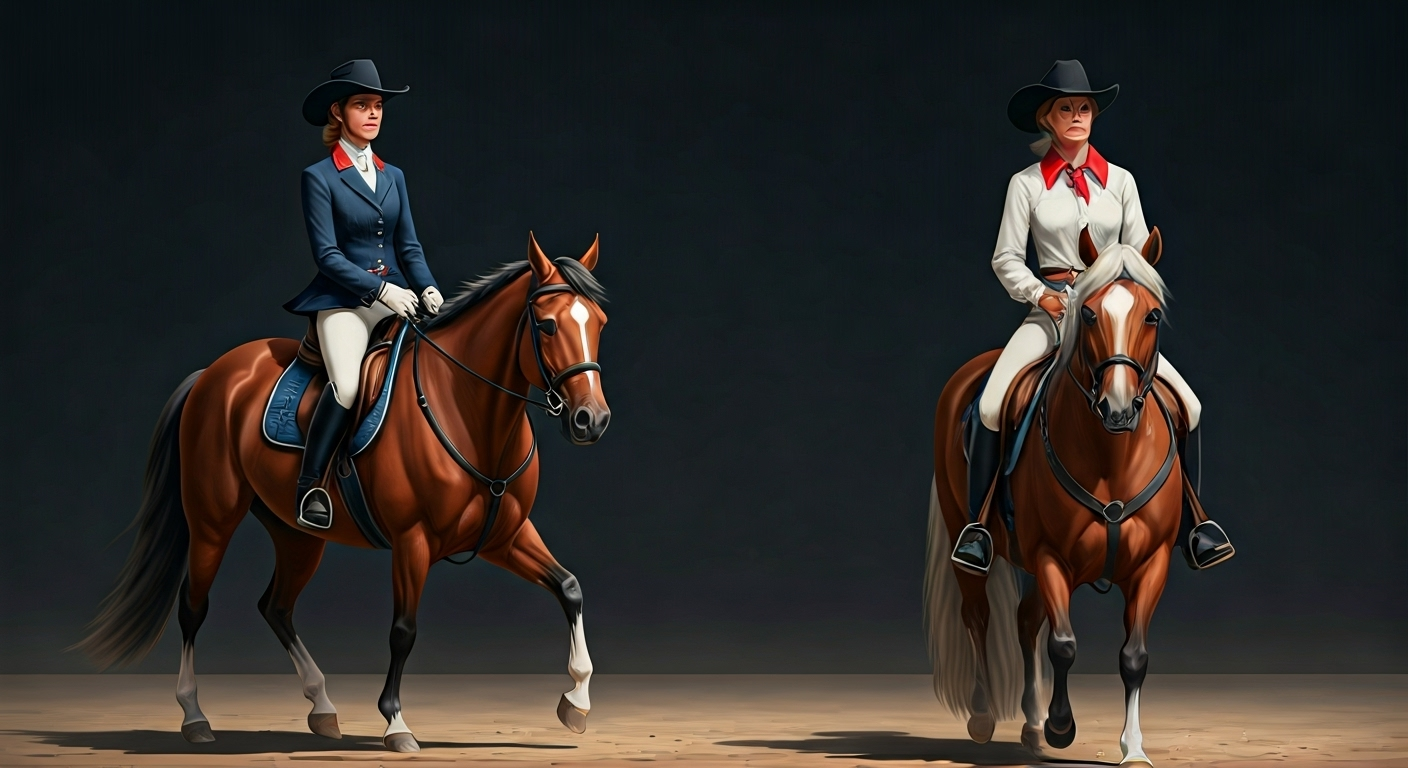
Western riding uses saddles that are strong and made for comfort. These are good for ranch work or events like reining and western pleasure.
Both ways of riding have their own features. But both aim to help people improve their rider’s skill. They also build a good bond between the rider and the horse across many equestrian disciplines.
Key Differences in Tack and Attire
| Aspect | English Style | Western Style |
|---|---|---|
| Saddle Design | Lightweight with close contact | Larger, reinforced for comfort |
| Dress Code | Formal and traditional | Casual, suited for country aesthetics |
| Usage | Competitive like show jumping | Working tasks like calf roping |
| Movement Focus | Elegance and precision | Fluid and relaxed riding styles |
English and Western disciplines vary not only in riding style but also in the gear used. English saddles focus on balance, while Western saddles emphasise durability. Attire is similarly distinct—English riders often wear breeches and blazers, while Western riders opt for functional yet stylish jeans and cowboy boots. These differences highlight the contrasting demands and traditions of equestrian disciplines.
Competition Formats and Judging Styles
English and Western equestrian disciplines have their own ways of competing and judging. In English disciplines, like dressage and equitation, the focus is on being exact and how the rider sits or handles the horse. Riders are judged using specific tests or by their posture.
On the other hand, Western competitions, including reining, look at the horse’s willingness and quickness. Here, horses follow set patterns to show what they can do.
Judges see how well the riders move or get past obstacles in these horse shows. When it comes to show jumping and hunter classes, the judging is about being fast or making things look good. In both styles, the main goal is to show the rider’s skill and how well the horse listens, even though the rules and what they look for can be different.
Conclusion
To sum up, the world of equestrian disciplines has a lot to offer. It is full of different choices, so there is something for everyone. This is true whether you have been riding for many years or are new to it. You can enjoy the grace of dressage or the fast-paced fun of show jumping. Each type shows off its own style and skills, and people be drawn to different ones based on what they like and what they can do. If you learn what makes them special, it will help you enjoy your time with horses even more. You can use this knowledge to find the discipline that fits your goals and dreams. Try different things and see which one makes you happy. If you want help that is just for you, or need more insights, you can always ask for a consultation. I wish you good luck and happy riding!
Frequently Asked Questions
What is the most popular equestrian discipline in the United States?
Western riding is big in the western United States. Events like reining and barrel racing are favorites there. At horse shows all over the country, show jumping is the top event. English riding styles, like dressage, have many fans because people see them in the Olympics. Horse racing is also a well-known part of America’s equestrian past.
Which discipline is best for beginners?
Many people new to riding usually start with hunter or equitation classes. These are good, as they help people get the basics right. In these classes, riders learn to move in a relaxed way and work on their posture. With time and practice, beginners start to know the horse better. This helps them move forward smoothly as they enjoy learning more in their equestrian journey.
How do I choose the right equestrian discipline?
Picking the right style of riding depends on what you know, what you want, and what you like. If you love being careful and want things just right, dressage might be for you. If you like adventure and want to go further, try endurance. Go to horse shows or watch different events. This can help you see what style of riding matches your goals and skills.
Are there equestrian disciplines suitable for children?
Horse riding activities like trail riding help children get started with equestrian sports in relaxed settings. Vaulting is new and fun for many kids, as it lets them try easy gymnastics while getting more confident. Both of these horse riding styles help children have a good and safe time. They make it easy for kids to enjoy equestrian sports and learn new things about horse riding.
https://pubmed.ncbi.nlm.nih.gov/3580722
https://doi.org/10.1136%2Fbjsm.21.1.22
https://web.archive.org/web/20100203123251/http://www.horsecouncil.org/nationaleconomics.php
https://doi.org/10.1136%2Fbjsm.2004.015750
https://commons.wikimedia.org/wiki/Category:Equestrian_sports
https://www.instagram.com/Olympics
https://www.britannica.com/event/Paris-1900-Olympic-Games